Marmolada (called the Queen of the Dolomites) is a mountain group of the Alps in the Province of Belluno (Veneto) and the Province of Trento, the highest of the Dolomites, reaching its highest point with Punta Penia (3,343 m). Marmolada glacier is the largest glacier in Dolomites.
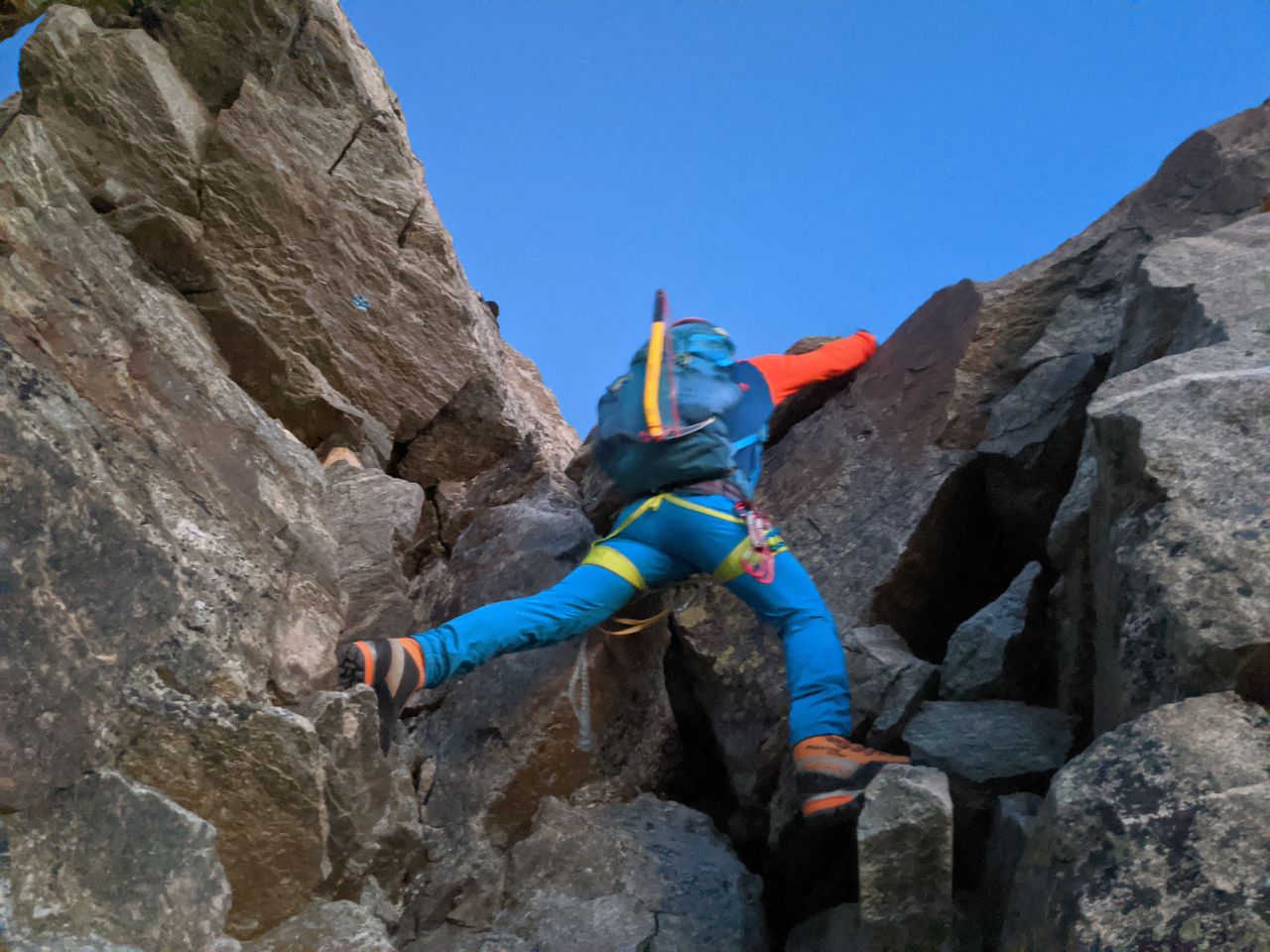
This route is the longest via ferrata in Dolomites. In my opinion, I would classify it in three sections - first section very short and exhaustive (grade C/D), the second section - long and easy in the slab (grade B/C), and the third section even longer and technical on the ridge. This route is recommended to only those who do via ferrata regularly as it's long and exposed. Most of the ferrata is renewed and is in very good conditions (as of summer 2018).
The first two sections take about 2-3 hours in total, then you arrive at a little gap before the ridge traversal starts. Most of the ridge traversal is on the North side of the ridge with glacier below. The ridge traversal takes also about 2-3 hours based on experience. There is a restaurant and museum after the ferrata ends.
Descent is through glacier but I don't know the conditions of the glacier. The best option is to take the cable car down. There are buses from the cable car station back to the lake.
First world war: Punta Suruata was one of most important sites of the war between Austria and Italy. The front line did not advance up the slopes, but from one side of the long Marmolada ridge to the other. Punta Suruata was originally held by the Austrians, who had already begun to dig into the rock. Then the Italians managed to haul up a pair of heavy machine guns onto opposing pinnacles, setting up a crossfire that convinced the Austrians to abandon their position. After the Italians took over, they set to work tunneling observation posts, sniper lookouts, and artillery positions. Meanwhile the Austrians dug into the glacier below, eventually carving out over 8 miles of tunnels. Only until one climbs where these poor souls fought and died does one fully grip the complete insanity of fighting a war in such a place. During this struggle, over 6,000 infantry were lost to weather and avalanches during a 3 day time period. Every summer new artifacts (and sometimes mortal remains) are found as the glacier recedes. There are some small museums (one on the Punta Suruata lift station, another at Lake Fedaia) that are worth the climbers time, as it adds meaning and respect to the climbing experience [from Summitpost].