Understanding and overcoming fear of heights
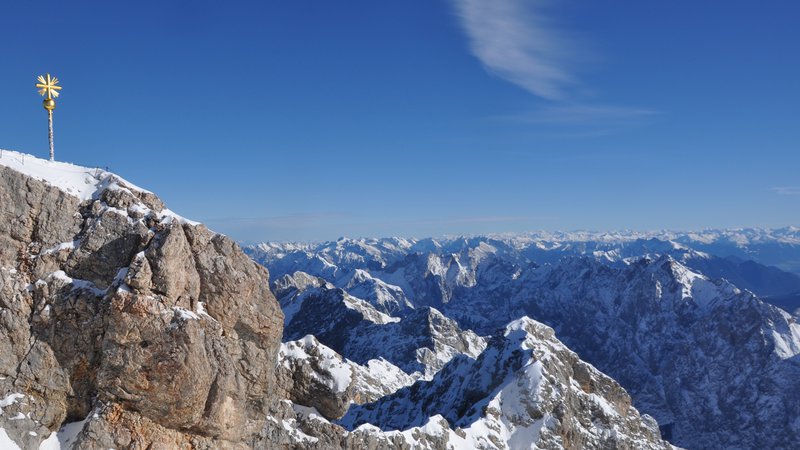
Are you afraid of heights? Does a friend or a relative have this fear? Is it normal? Are we humans genetically afraid of heights?
The answer is always yes, all human beings are afraid of heights. Among all these people, hikers are also afraid of heights and anyone who says the fear is not there, is lying or should see a doctor. The major difference is that mature hikers are aware, understand and above all, use fear as a fuel.
Because many people do not understand it, fear is able to limit or stop them from reaching goals. To be able to control fear of heights you have to identify it's source and see where is it coming from.
We can separate fear of heights into two categories: fear of heights, a normal function of our brain meant to protect us, and fear of falling which is actually fear of accidents, fear of hurting yourself.
The main difference between these two types is the moment they appear: fear of heights appears during a tour, in a situation you perceive as dangerous. In such a situation, the brain, as a protection system, is focused on what might go wrong and you will start to sweat, shake, get palpitations and feel dizzy. The fear of falling, of hurting yourself, appears before a tour. The brain remembers or imagines dangerous situations and stops you in having the adventure you want.
On a physical level, fear of heights appears when there are no fixed points left or right and you do not see anything close in front of your eyes. The feeling of dizziness is just a message, a result of this protection system, because the brain can't perceive anything else.
If we want to bypass our protection system, taking a pill is not the solution. Think everything as a process in which you have to constantly make your brain used to the "unfriendly" environment. Make conquering your fear a long-term objective and constantly do something in that direction.
To reach your goal, first you have to know where you stand, your actual condition, because if you don't know your level, it will be hard to make the necessary steps. Imagine that you want to drive to Berlin and you don't know where you are. Would you drive to the West or to the East?
In our case, understand how hikes are marked by informing yourself from this article about the Swiss (SAC) Hiking Scale: T1 to T6 (T1 has almost no danger and T6 is extreme dangerous) and evaluate your present state. Understand on which hikes from that scale you feel more comfortably.
For example now you feel safe doing T2 hikes. Start with a few T2 hikes with some portions of T3. Continue your progress by doing ten T3 hikes, for your brain to get used to the new requirements.
After you feel confident, do ten T4 hikes, to help to get your brain used to these new challenges, and the most important message that you give to your brain is... you did it and you survived. It is a safe place. Later on, you can go on a hike with some small section of T5, than add some more technical sections, and in the end you will be able to do T5 hikes on your own, without external support.
Making your progress visible helps, so record each hike. On the short term you will get small quantities of dopamine, the motivation hormone produced by our brain when we accomplish something and on the long termyou will have a big picture on our progress. That helps if you'll feel unmotivated or insecure, so you will be able to look at your progress and get your confidence back.
Everything is about building your own mental power: How do you eat an elephant? Piece by piece! And the Bavarian version: How do you eat wurst? How do you eat salami? Slice by slice.
The other type of fear is fear of falling and it appears in our childhood or when we assisted a traumatic experience.
Just ask yourself these questions to understand if the fear is justified or unjustified, or if the fear is real or not.
- Could I be wrong about it?
- Is it possible to be different than I anticipate?
- What should happen so I don't feel fear anymore?
- What should happen to feel safe?
- Am I the first one on this route or was someone else here before?
In addition to these questions, eliminate stress produced by the fear of the unknown. Plan rigorously your hike to eliminate all major uncertainties. Consider your route, weather, equipment, your own physical condition, the fitness of the other participants, be sure you know how to navigate (map or GPS), inform yourself about some exit or return points, bring enough food and beverages.
To conquer fear of heights and to successfully reach your objectives you have to understand the close connection between your body, thoughts and emotions.
Every now and then do a body check to be aware of your state:
- How is my breath?
- What is my body posture?
- What thoughts are in my mind right now?
- Am I hungry or thirsty?
- How is my energy level?
Breath
When we are afraid, the breath is faster, the body is tenser, our senses amplify a lot, the level of oxygen from your brain changes and your judgment is affected.
Breath control means conscious breathing and you should be aware about it also when you are not in stressful moments. To have a constant breathing, hike with a constant tempo. For example, when you reach a steep section do not approach the route directly, but try to zigzag as much as possible your ascent.
With the help of breath you can also stabilize your own tempo and these two breathing methods could be used on your hikes.
Breathing method 1. The time of exhale should be double compared with the time you inhale. 3 seconds IN, 6 seconds OUT. When you inhale count from 1 to 4, when you exhale count from 1 to 7. When someone breathes consciously, the focus switches from the danger on the breath.
Breathing method 2. You stay focused on a cloud and imagine that you push the cloud with your breath. Be sure to take deep breaths and use this method for at least two minutes to notice results.
Body posture
In difficult situations, we easily notice a change in our body posture: the muscles tense, the gravitational point moves to the back (we instinctively put our hands in front to protect our heart and lunges) and the movement coordination reduces.
The main idea is to be aware of your body posture. When we notice that our muscles are tense we should relax them. As effect, the gravitational point becomes more stable and the focus will turn from the danger to our body posture.
One technique to improve your state is the following: “If you can fake it, you can make it!” When you are tired, you normally look on the ground, with your head and shoulders down. To change this state, stay for two minutes with your head high; look up and straighten your back and shoulders. Your body will transmit a different message to your brain and your state will quickly improve.
Thoughts - how to limit your unproductive thoughts
In a risky situation your thoughts are spiraling around the perceived danger, which means you won’t have much control of your mind. The fear will arise and you can go up to panic or panic attacks. Additionally, your perception and your tactile sense will be limited and you will no longer be able to hear other noises or sounds.
When you plan a new route, search for two different descriptions. Each author described the route from his or hers own point of view. What was dangerous or difficult for somebody cannot necessarily mean that is difficult for someone else.
You can change the direction of your thoughts using one of these techniques because people cannot consciously think on two things simultaneously.
Visualization technique:
Start visualizing positive things or experiences to make them familiar to your brain. You can find examples with already achieved goals, or you can even imagine new things. After we close our eyes, the brain does not know the difference between fantasy and reality and in our mind it is always present time.
Breathing technique: You focus on your breath 5 minutes and you count the breaths. If a thought intervenes in your counting, just keep in mind the number and start over.
At the beginning it might be hard, but after a while your focus will improve and you can focus yourself for 10, 15 or 20 minutes.
You can also do this exercise while you are waiting in a traffic jam, in a train station or why not, at the line at the supermarket!
Being hungry or thirsty
If we are in a peaceful state, our body is calm and our mind clear. If we are hungry, a lot of energy is lost because subconsciously we think on food and how to get it.
To keep your body relaxed, make five minutes brakes for every hour you hike: drinking breaks, eating breaks and why not, photo breaks. Do these breaks on flat terrain, because after a break it takes some time until you re-enter hiking mode, so make it easier and start from a smooth position.
Be careful and always stay hydrated: only 20% of loss of fluids can influence 70 % of our performance.
Energy level - Do I feel tired? What is my stress level?
Being tired or rested influences the way we evaluate reality and the difference between a good and a bad hike is given only by our perception.
When we are tired, we didn‘t get a lot of sleep, or we didn‘t recover enough from last week, our brain transmits signals to protect our resources (energy). Each of these signals raises the level of stress and carries a message to our brain: we are in danger.
To reduce the stress's level, you can consider some of these tips:
- Let someone more experienced walk in front;
- Take a 3-4 m rope and give one end to an experienced person who walks in front of you. If you do this, two things will happen: you will have a three-point secured position and second, you will be supported in case of falling;
- Do not change your visual angle very fast (in case that happen, your subconscious will treat this action as a danger and react accordingly);
- If other hikers are coming from behind, the ideal way is to let them pass. In this manner you eliminate the stress that comes by having someone in the back.
You cannot control what you don't know
And you cannot know until you start exploring!
In this article are both information about fear of heights and also methods to control it, so in difficult moments your talents, abilities and mental power will always be there to support you.
Just go hiking!